
Pastor's Blog
Pastor's Blog
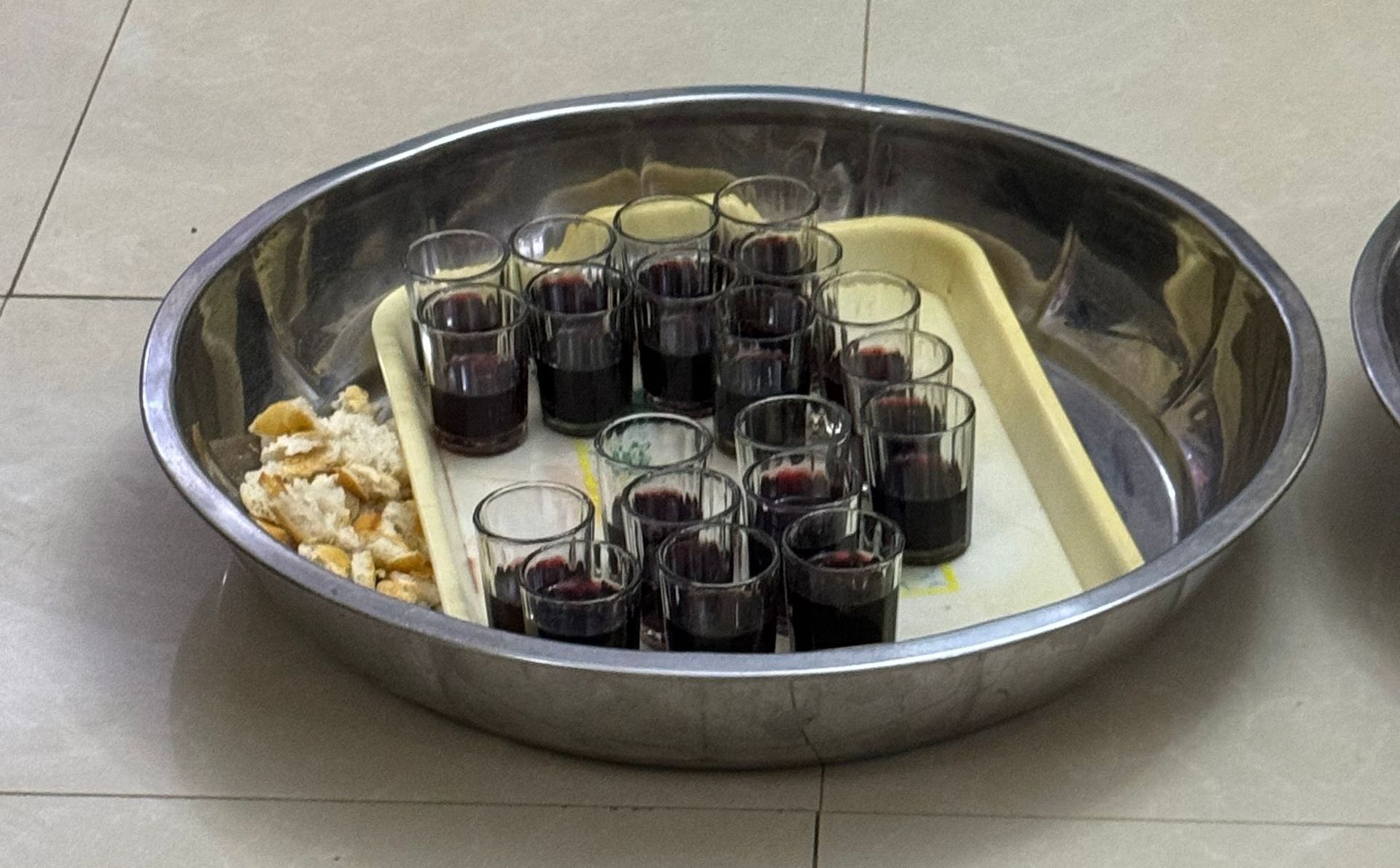
Each day we separately walk different sandy roads to arrive at the same destination so that we can talk about Jesus with one another. Then we eat lunch from a common bowl, a symbol of our united hearts. Today, Sunday, we participated in communion, reminding us that we have Christ in common with one another. There is so much that draws us together. But there is also much that is uncommon/different between us and our African brothers and sisters. During the testimony time this morning, M, thank God for taking his family to Heaven. Just last week soldiers pursuing terrorists, massacred 150 people in his village, killing M’s mother, two sisters, cousins, and nieces. And yet today, on Sunday, he, thanked God for grace and Heaven. S was a sheep thief. It’s how he made his living. But one day he met an American missionary, who told him about Jesus. S refused Christ but soon found himself in a sandstorm like no other he had ever encountered. As he covered his face and knelt in the sand, he prayed, “Oh God of the Christians, save me, and I will serve you.” S survived the sandstorm, found the missionary and trusted Christ. As of today, he has discipled a multitude of new believers in his country. When J became a Christian his father shot at him with a shotgun, trying to kill him. Today he says, “I am my father’s favorite son.” Fortunately, his father, who is not a Christian but who carries much influence in his community, has enabled his missionary son to be released from prison multiple times. When E became a Christian, he prayed seven years for a wife. He eventually led a woman to Christ, married her, and they had a baby. But when her Muslim parents found out their daughter and her husband were Christians, they used the country’s law to threaten to take the child. Rather than abandon their baby, E’s wife returned to her family who moved her and the baby to an undisclosed location in their country. He however, considered Christ the greater treasure, and could not turn back from following Jesus. Like every other story, I have told in this post, there are now innumerable believers in these countries, because of the sacrifice these Christians have made. These are just a few of the countless and common stories of common men and women who have opted to follow Jesus in Muslim dominated countries. Suffering and sacrifice is as common to their Christianity as sand is to the ground of the countries in which they serve. Uncommon in our world but common to much of the world. Today, during the preaching time, I thanked them for loving Jesus, and told them they were the model for the American church. It astounds them to believe this is true, but it is. We have much to learn from our African friends. And we are watching them…thanking God for them…and hoping to imitate them in their love for Jesus.
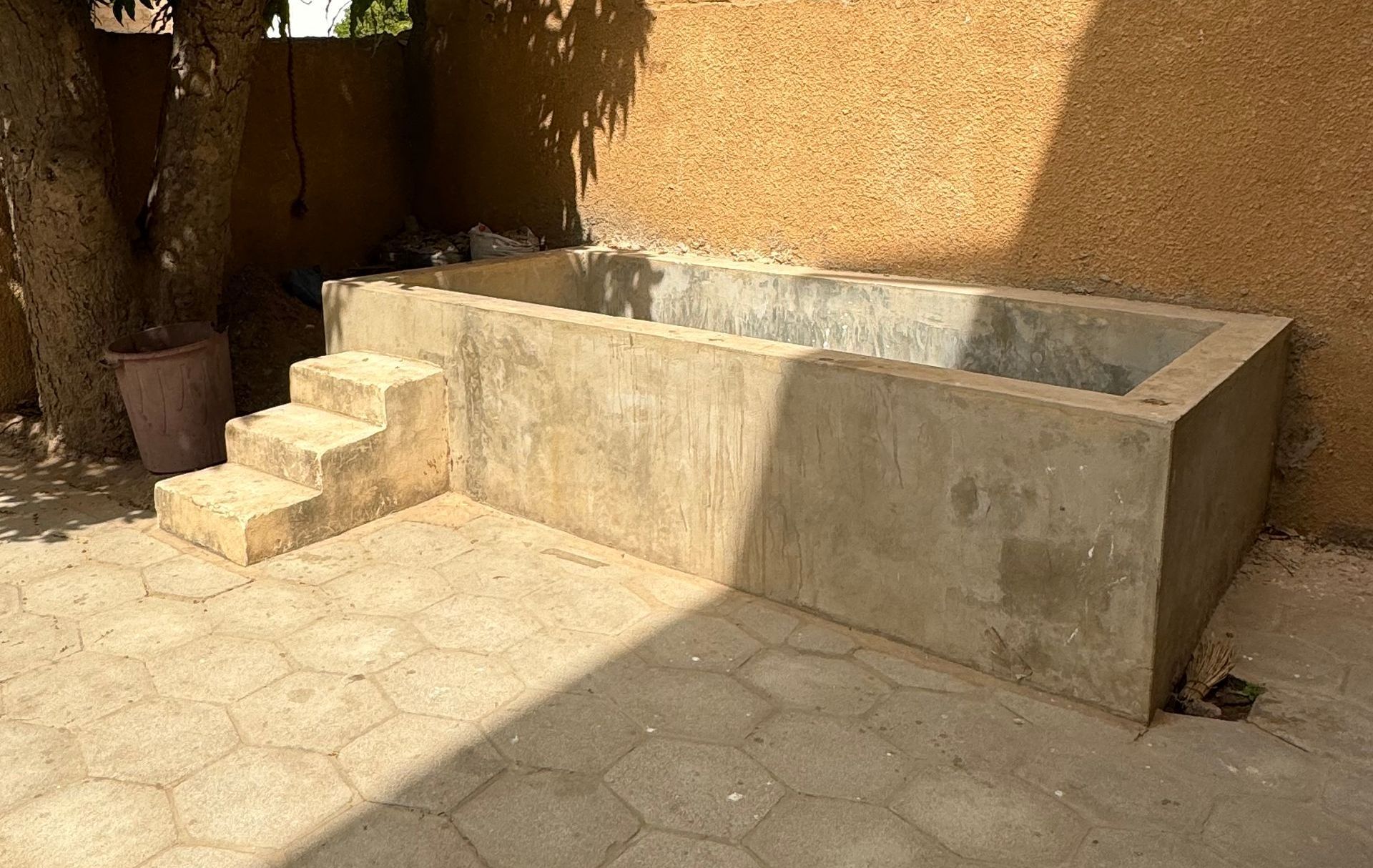
Last night our little body of believers stood in an upper room in this African country and simultaneously sang, “I have decided to follow Jesus” in almost ten different languages. It reminded me of when TS baptized his son at Heritage in the late 90’s. T asked his son a question that was never previously asked at a Heritage baptism and has not been asked since. That’s because T and his family were born and lived in a Communist country that killed Christians as easily as toppling dominoes. What was the unique question T asked his teenage son? “Are you willing to die for Jesus?” We don’t ask that question at American baptisms because Christians in America have never been persecuted to death. Not yet anyway. But in too many countries, Christians are killed for their allegiance to Jesus’ name. Even so, people around the world continue to believe in him. And Tertullian’s maxim, “The blood of the martyrs is the seed of the church” continues to prove true. I mean, when killing the Leader results in an undeniable resurrection, what can you do to discourage his followers? Where T lived and where these brothers and sisters live, the defining moment is often baptism, that public confession of faith in Jesus as God’s Son. And yet, presciently knowing the danger but in light of his resurrection, Jesus commanded his followers to take the gospel everywhere, baptizing new believers (Matt 28:18-20). And people continue to be baptized - publically confessing their love for Jesus and symbolizing their faith in the death, burial, and resurrection of Jesus, as well as death to their past life and new life in Christ - in spite of the inevitable danger. So the next time you witness a safe baptism in America, say a sincere prayer for your brothers and sisters around the world who step into a baptismal pool like the one I took a picture of in this Muslim dominated country where Teana and I are now. They may as well be stepping into a shark infested sea, an alligator ridden lake, or the piranha filled Amazon, risking their very lives to follow Jesus. It seems no one is discouraged by the question, “Are you willing to die for Jesus?” The answer is “Yes. I have decided to follow Jesus,” every time.
I’m not sure which comes first every morning, the Muslim call to prayer or the rooster. They’re almost simultaneous. But the call to prayer eventually stops and the rooster crows all day. Billions of people around the world hear one, the other, or both every morning of their lives. But in the midst of this Muslim dominated world and in some countries where Christianity is outlawed by the constitution, this small Christian mission organization is thriving. Two years ago they had 60 indigenous missionaries in 5 African countries. As of today, they are employing over 130 African missionaries who are carrying the gospel to 14 African countries, “to the end of the earth” (Acts 1:8) you might say. It’s a 10/40 window dream come true. Teana and I are here to participate in the third step of their four-pronged strategy to reach Africa: ongoing education. Team leaders representing those 14 countries have gathered to learn shepherd leadership for their various teams. Last year I taught the principles of Jesus’s shepherding heart in the 23rd Psalm at Heritage and those 7 sermons have become one of the sessions I’m teaching here; along with Ez 34, all four Gospels, John 10 and 1 Peter 5. “How’s it going?” you might ask. Well, try teaching shepherd leadership to men who are literal shepherds. Take S for instance. As a desert shepherd in a country that regularly imprisons and kills Christians, he had a compelling dream about the real God. This prompted him to ask his fellow shepherds and villagers if they knew of any Christians. Just to ask the question was dangerous. Someone told him they heard of a Christian in another village, two days walk away. And so S trekked two days in the hope the rumor was true. By God’s grace it was and he trusted Jesus as his Savior. Now, he’s shepherding God’s flock as a team leader of missionaries who evangelize, begin Bible studies that become house fellowships. Once elders and deacons are established and the fellowship is receiving offerings, baptizing new converts and celebrating communion, it becomes a church. At that point, the missionary moves on to another village. It’s an incredible vision and a successful strategy. If you’re a member of Heritage, God is using your prayers and funding to make it happen. As Teana and I have brought greetings from you, these African brothers and sisters send greetings and gratitude to you. In this life we will never meet every convert of this ministry, but one day we will stand together before God’s throne and sing, “Worthy are you…for you were slain, and by your blood you ransomed people for God from every tribe and language and people and nation” (Rev 5:9). PS. There are no pictures today. It’s literally too dangerous. One man in this ministry has been jailed 12 times. His response, “Thank God no single imprisonment was longer than six months.” BTW, in one prison specifically created for extremists, they eventually had to put him in solitary confinement because he would not stop telling Muslim terrorists about Jesus. - Reggie Weems
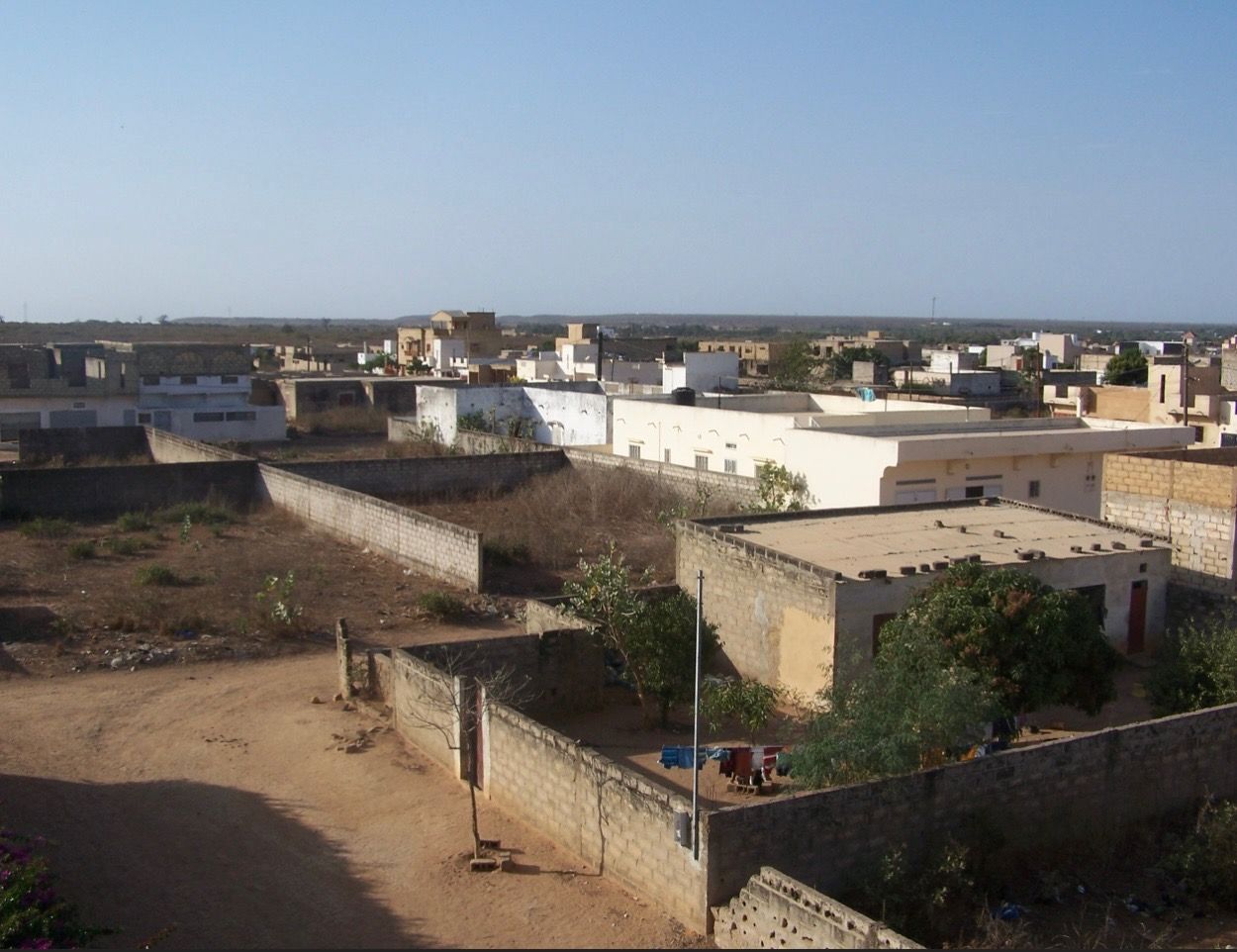
The differences are stark but the similarities are present as well. Even in the midst of war and winter, Ukraine is still a first world country. Its landscape is pleasantly covered in trees and grass. Its gorgeous black soil makes it the breadbasket of Europe. Here in the subSahara, the sand color of dirt - dirt roads, dirt yards, dirt sandstorms - is by far the dominant feature. And the heat is a natural, constant, even dangerous oppressor. “What similarities!?” you ask. People everywhere need Christ. Ukraine is in war because a Russian leader is personally, literally epitomizing James 4:1-3 - “Where do wars and fights come from among you? Do they not come from your desires for pleasure that war in your members? You lust and do not have. You murder and covet and cannot obtain. You fight and war.” But the similarities don’t stop there. One of the missionaries I’m sharing with this week comes from a village in which 150 people, including his mother and siblings, were just (the day before yesterday) executed by the government. And yet, he has made his way here to learn more about shepherding the missionary team he leads. How can a person carry on like this? The answer lies in the power of the gospel. The gospel has changed him, and he knows first-hand it is the only hope for his nation. Otherwise, his country (and the globe for that matter) will continue to commit suicide by murdering itself. In the history of the world, only Christianity has and does present a true model of love, joy and peace that can save the world. (This does not deny that non-Christians have abused Christianity to the world’s harm, but that is not the model of Jesus and is not Christianity). We left our hotel in Europe at 4am yesterday and arrived here to be met by our gracious hosts at about 11pm. And so, on this first day here, sing this song with me as a prayer for the Gospel here and the Gospel where you are - “Brethren, we have met to worship And adore the Lord our God; Will you pray with all your power, While we try to preach the Word? All is vain unless the Spirit Of the Holy One comes down; Brethren, pray, and holy manna Will be showered all around. Brethren, see poor sinners round you Slumb'ring on the brink of woe; Death is coming, hell is moving, Can you bear to let them go? See our fathers and our mothers, And our children sinking down; Brethren, pray and holy manna Will be showered all around. Sisters, will you join and help us? Moses' sister aided him; Will you help the trembling mourners Who are struggling hard with sin? Tell them all about the Savior, Tell them that He will be found; Sisters, pray, and holy manna Will be showered all around. Let us love our God supremely, Let us love each other, too; Let us love and pray for sinners, Till our God makes all things new. Then He'll call us home to heaven, At His table we'll sit down; Christ will gird Himself, and serve us With sweet manna all around.” - Reggie Weems
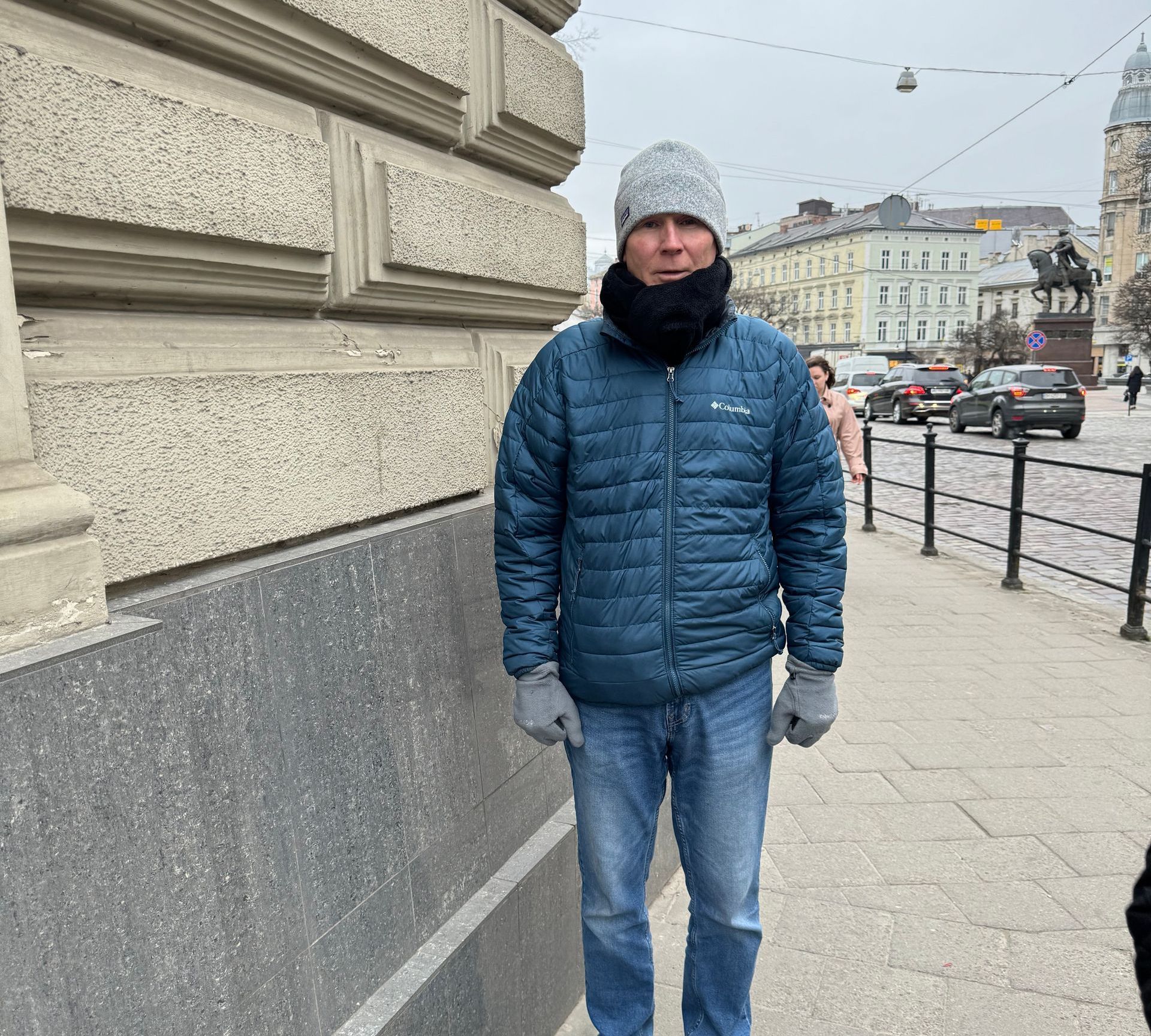
It’s 6am in Warsaw and Teana and I are on board our flight to an African Muslim dominated country. We will arrive at 8pm this evening and I will begin teaching African missionary team leaders on the concept of shepherd leadership tomorrow morning. Teana will be investing in the wives of these leaders. Some of you knew and others correctly surmised that we have been in Ukraine this past week. Oh, the stories we hope to tell… For instance, what would your church do, how would Heritage respond, if a thousand people (and that’s a literal number) knocked on the church’s front door one morning. These are people with only the clothes on their back, no food, no housing, no education for their children, no medical care, and unprepared to survive the winter. Did I mention that the vast majority of them have pets they can’t leave anywhere and have to bring to church with them on Sunday and Wednesday? The Ukranian church has responded magnificently, assisted by churches like Heritage. And although our memories may be short, the war is far from over. In addition to working with New Horizons for Children during the day. Teana and I invested our evenings meeting with local pastors and missionaries. By the Lord’s grace, we enjoyed supper with two American missionaries and two national pastors. One night we had supper with an American missionary and his wife. When the war began, they’re sending board required them to leave the country and wanted to place them in full-time service in another country. But as soon as they could, they returned to Ukraine several months ago. On Monday night, a local pastor told us that if a Ukranian pastor left the country to escape the war, he would not be accepted by the church if he tried to return when the war ended. That’s a high bar for pastors. But Jesus reminds us that many shepherds are in fact, not shepherds but “hirelings” who…”sees the wolf coming and leaves the sheep and flees…” (John 10:12). Contrarily, Jesus, is the “good shepherd [who] lays down his life for the sheep” (10:11) as these Ukranian pastors are doing. Providentially, I’ll be employing that John 10 passage next week in one of my teaching sessions for African missionaries leaders who not only shepherd congregations but lead other missionaries. All of these people live and minister in Muslim dominated countries where, like Ukraine, it would be easier to seek a more comfortable ministry environment than risk one’s life. All of this to say the church of Jesus, comprised of our brothers and sisters around the world, is suffering greatly. It is our privilege to pray for them, and to come alongside them when, and as we can. That’s what we’ve been doing this week on behalf of the people who gather at Heritage Baptist Church. PS. It was in the 30s-40s in Ukraine. I’ll need a change of clothes for the temperatures in Africa. We’re expecting a daily low of 102°. - Reggie Weems

Culture is the language, customs, arts. food, celebrations, attitudes, values, etc., that make a people unitedly unique. It is what makes a people and place different, beautiful, interesting, and worth visiting. Biblically speaking, culture is the beautiful, variegated, human display of Trinitarian glory. Like the Father, Son and Spirit, cultures possess equal status but are wildly different in the best sense of the word. God did not create culture but he did make the now fallen image bearers who (sub)create it. In addition to reflecting the Trinity, culture is also an illustration of God’s own complex creation - night and day, air, earth and water, male and female, etc. Each is important to making the world what God intends it to be. Fundamentally, every culture brings its glorious distinctiveness to the overall ‘Wow!’ of living on planet earth and it’s human pride that makes people think the essence of one culture is superior to another. Or that all cultures should be melted into one. The biblical basis of culture means that any political or religious attempt to destroy a culture is a denial of the Trinity, creation and grace. The church of Jesus should vehemently protest any form of cultural genocide. Such hellish disgrace is what Teana and I witnessed in Ukraine this past week and will witness in Africa next week. Angry, insecure, ungodly people are murdering other people to annihilate whole cultures. Russia in Ukraine and Islam in Africa. But it will not succeed. God will forever be glorified by a multitude of cultures and their continued existence is another proof of his existence and sovereignty. How do we know this? Think on these verses. “After this I looked, and behold, a great multitude that no one could number, from every nation, from all tribes and peoples and languages [four synonyms for culture] standing before the throne and before the Lamb, clothed in white robes, with palm branches in their hands, and crying out with a loud voice, “Salvation belongs to our God who sits on the throne, and to the Lamb!” (Rev7:9-10). Think for a moment about that explosion of myriad languages, posture, dress, and dance before God’s throne. Cultural expressions of worship will be innumerable and ceaseless. “…and the kings of the earth will bring their glory [a synonym for their cultural wealth] into it [the New Jerusalem]” (Rev 21:24). Think for a moment about how the glory of those cultures will add to God’s eternal glory. PS. Did you notice that God is glorified in Heaven by various cultures which means that differing cultures will still exist forever in Heaven? So rage on world and religious leaders. You will fail in your attempts to rob God of his glory in all people’s everywhere. “He who sits in the heavens laughs…” at your vanity (Psalm 2:4). Instead of killing people, you should repent and “Kiss the Son, lest he be angry, and you perish in the way, for his wrath is quickly kindled” (2:12a). Until then, “Blessed are all who take refuge in him” (2:12b), especially the people of Ukraine and Africa. - Reggie Weems
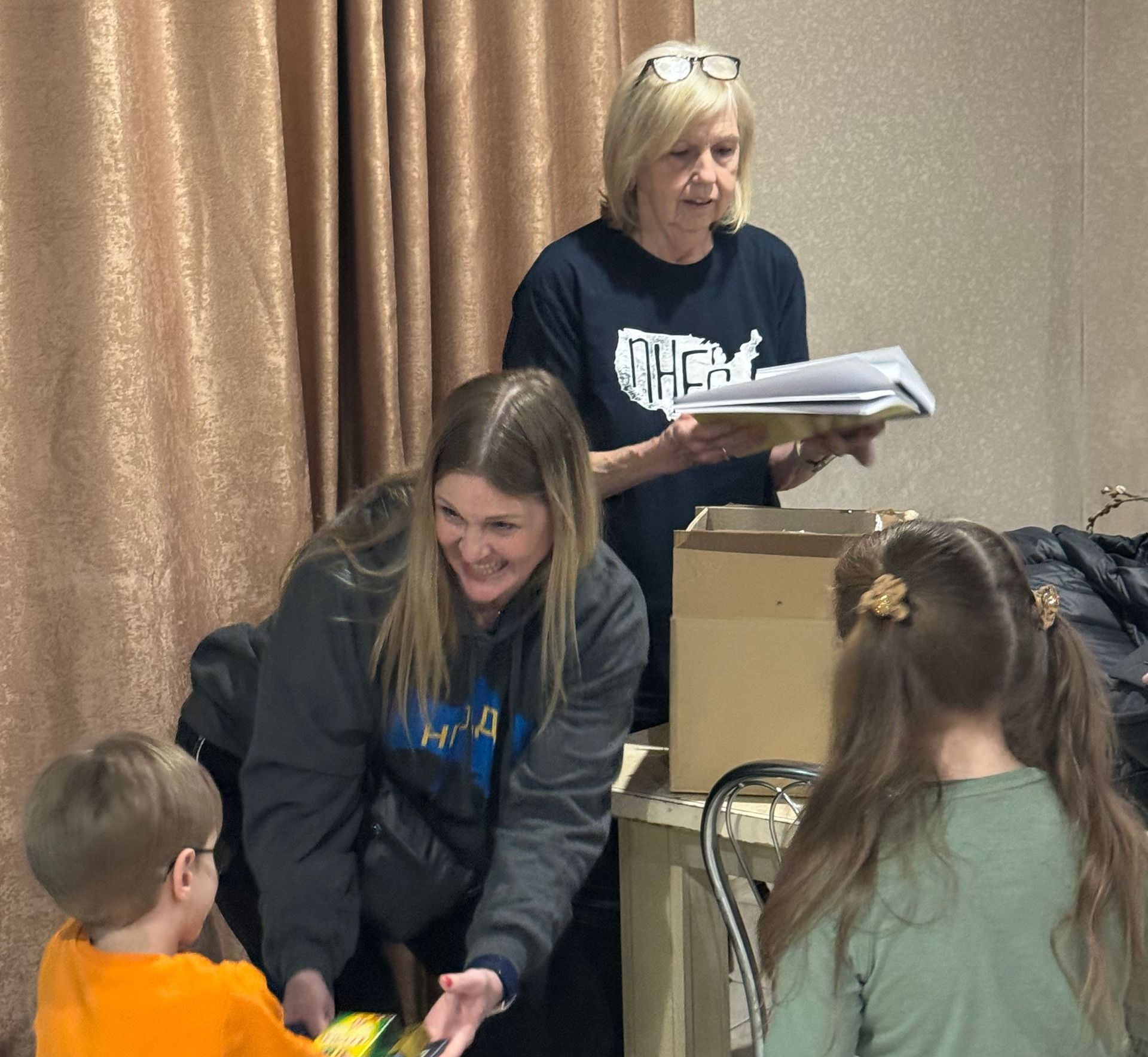
This morning Teana, Moses and I met God at the burning bush in Exodus 3. It was quite the experience. After 40 years shepherding sheep, God called Moses to shepherd his flock out of Egypt and into the Promised Land. If you saw it on the silver screen, the burning bush moment wouldn’t be as spectacular as the Ten Plague’s or crossing the Red Sea but it’s the humble beginning of it all. And it sets the stage for everything else that happened. In the Bible God often refers to his people in living terms; a vine, a tree, etc. and often portrays suffering as a refining fire. “Where is God?” you ask, in Israel’s Egyptian suffering. That’s a good question. But if you look closely you will see and hear him…in the middle of the burning bush. There his is, suffering along with his people. Israel didn’t know it but God was not absent. He was keenly aware of their plight. So millennia before the cross, Jesus stepped into the crucible of Israeli’s suffering, pictured in a burning bush, to suffer with them. It is a foreshadowing of the cross yet to come. That’s an important word for displaced, disabled orphans. It’s a meaningful thought for you and me. God cannot be successfully accused of indifference. Quite the opposite. When he did not have to do so, Jesus willingly left Heaven to become displaced, orphaned, a refugee. But more than all of that. Worse than all if that. He “became sin” so that we might “become the righteousness of God in him” (2 Cor 5:21). He is in the midst of your burning bush and his cross is the source of every other blessing the Father bestows. Thinking about Jesus in the fire with us births this song, one of Teana’s new favorites, and one we are singing as we visit orphanages for displaced and special needs children again today. We are there not only to perform well checks but also to remind the children of God’s redeeming love. May it be your song as Jesus endures your burning bush with you. “Blessed Assurance, Jesus is mine He's been my fourth man in the fire time after time Born of His Spirit, washed in His blood And what He did for me on Calvary is more than enough Perfect submission, all is at rest I know the author of tomorrow has ordered my steps So this is my story and this is my song Praising my risen King and Savior all the day long. I trust in God, my Savior The one who will never fail He will never fail I trust in God, my Savior The one who will never fail He will never fail.”

According to the UNHCR, “Refugee camps are temporary facilities built to provide immediate assistance and protection to” the 6.6 million people around the globe “who have been forced to flee their homes due to violence, conflict or persecution.” We visited one of those refugee camps today with New Horizons for Children in an effort to perform well checks for its many children. Fortunately, Jesus understands childhood trauma. Luke draws the curtain back for a glimpse of Jesus’s childhood on three occasions and in each, he is enduring the “slings and arrows” of any childhood; the trauma of birth, pain of circumcision and obedience to his fallen, sinful parents. In the interim, Matthew reminds us that Jesus also endured a temporary refugee status in Egypt when Herod tried to kill him. (In the bigger picture, Jesus was stepping into the role of God’s obedient son, aka, Israel, but unlike Israel. When Israel left Egypt, they quickly forsook God in the wilderness. But not Christ. He too came out of Egypt but repeatedly chose to worship God alone in his 40-day wilderness trek). No wonder the Hebrews writer could confidently say that Jesus endured temptations akin to ours but without sin. As such, Jesus fulfilled the law in every way. His passive obedience demonstrated in his passion, (arrest, imprisonment, beating, false accusations and cross) satisfies the sacrificial law, eliminating our sin debt. His active obedience, (never once deviating from the Father’s will as a child or adult), fulfills the moral law, granting us his righteousness. We are not only forgiven but also cleansed (1 John 1:9), a ‘double cure’ for what ails us. I know, at this point you want to join the Apostle Paul in one of his doxologies. So do I. But let’s sing this - “Rock of Ages, cleft for me. Let me hide myself in Thee; Let the water and the blood, From Thy wounded side which flowed, Be of sin the double cure, Save from wrath and make me pure.” But what does this have to do with seeing orphaned refugees? Great question. Earlier in the week you and I conversed about the ‘orphan/adoption’ doctrine. And Jesus’s refugee status in Egypt certainly meets the UNHCR definition of a person who is “forced to flee their homes due to violence, conflict or persecution.” But even though he didn’t flee Heaven in that manner, his lifetime status on earth can be defined as alien, ex pat or refugee. It wasn’t just Egypt. And that’s what makes it so breathtaking. No one forced him out of Heaven. He didn’t have to leave. Instead. Jesus did it all out of love of the Father and to fulfill a covenant made before the world’s creation and ratified in Gen 15. Once here, he literally endured Hell-on-earth in a scenario so unimaginable, God turned off the sun to blanket in darkness the greatest wrong ever perpetrated on earth. We often read about it but it will require going to Heaven to understand the enormity of it all. This means Jesus feels the childhood trauma of every orphaned refugee. How bad is it in the country we are visiting? You may not be able to read the picture clearly, but its of a poster offering a way to report war crimes. That’s how bad it is. And yet, it may sound terrible at first, but what I’m about to say is true and good for us to know. What Jesus endured was far worse than what any human being will ever suffer. Want a deeper truth? What Jesus suffered is far worse than all the combined suffering of all the people who have ever lived or will ever live. In other words, his suffering swallowed up ours and vanquished it on the cross and in his resurrection. It does not win. He has! Who have you lost? What are you running from? What hurts you? Jesus not only understands, his death and resurrection are its answer. So let’s continue the song, only louder now because the truth of what Jesus has done beats louder in your heart. “Not the labor of my hands Can fulfill Thy law’s demands; Could my zeal no respite know, Could my tears forever flow, All for sin could not atone;Thou must save, and Thou alone. Nothing in my hand I bring, Simply to Thy cross I cling; Naked, come to Thee for dress; Helpless, look to Thee for grace; Foul, I to the fountain fly; Got a Wash me, Savior, or I die. While I draw this fleeting breath, When my eyes shall close in death, When I rise to worlds unknown, Oh, And behold Thee on Thy throne, Rock of Ages, cleft for me, Let me hide myself in Thee.” - Reggie Weems
Too often we pray for and to the people around us rather than to and for God

War and The Sovereignty of God
ABOUT
CONNECT
TEACHING
OTHER RESOURCES